The Escalating Conflict: Understanding Iran's Retaliation and Missile Defense Challenges
The geopolitical landscape of the Middle East has once again been shaken by a significant escalation, as a series of coordinated strikes initiated by US and Israeli forces against Iranian targets met with a swift and resolute response from Tehran. This cycle of aggression and retaliation has brought to the forefront critical questions about missile defense capabilities, the limits of air power, and the ever-present regional tensions. The initial wave of attacks, meticulously planned to cripple Iran's strategic capabilities and leadership infrastructure, aimed to reshape the balance of power. However, Iran's subsequent missile attack, or "иран ракетная атака" as it's often discussed, highlighted vulnerabilities in even the most advanced defense systems and underscored the complex, unpredictable nature of modern warfare.
The Opening Salvo: US-Israel Strikes on Iran's Core
The initial phase of this intensified conflict saw a concentrated aerial campaign by US and Israeli forces targeting a broad spectrum of Iranian assets. Reports indicate that dozens of military installations, key infrastructure facilities, and sites believed to house the country's leadership were struck. While initial intelligence suggested Iran's President and Supreme Leader remained unharmed in secure locations, the sheer scale of the operation left no doubt about the aggressors' intent. Beyond the physical destruction, sophisticated cyberattacks were simultaneously launched against official Iranian informational resources, aiming to disrupt communications and sow confusion.
The strategic objectives behind these strikes were multi-layered and ambitious. Foremost among them was the stated goal of incapacitating Iran's top leadership, effectively aiming for regime change. Concurrently, a significant priority was the degradation of Iran's air defense system, which, according to some assessments, had not fully recovered from previous engagements. Missile units, vital to Iran's offensive and defensive capabilities, were specifically targeted, although experts noted that a single wave of attacks could not neutralize the entirety of such a vast network. Symbolic centers of state power, including intelligence headquarters, the Ministry of Defense, the office of Supreme Leader Ali Khamenei, the Atomic Energy Organization, and key judicial institutions, were also hit. The bombardment was not confined to the capital, Tehran; at least a dozen major provincial cities like Qom, Tabriz, Bushehr, and Isfahan also experienced significant strikes, signaling a far broader scope than previous skirmishes.
This aerial offensive was notably more extensive than earlier campaigns, targeting a wider array of objectives. A powerful statement from then-President Trump underscored the gravity of the situation: "We will ensure that Iran does not get nuclear weapons. This is a very simple message: they will never have nuclear weapons." This assertion not only reaffirmed a long-standing red line but also implicitly suggested that previous efforts to curb Iran's nuclear ambitions through sanctions and limited strikes had fallen short, indicating that Iran had continued its pursuit of atomic capabilities despite international pressure. For a deeper dive into these initial operations, consider reading our article on
Iran War: US-Israel Airstrikes Target Leaders & Nuclear Sites.
Iran's Counter-Strike: Assessing Missile Defense Effectiveness
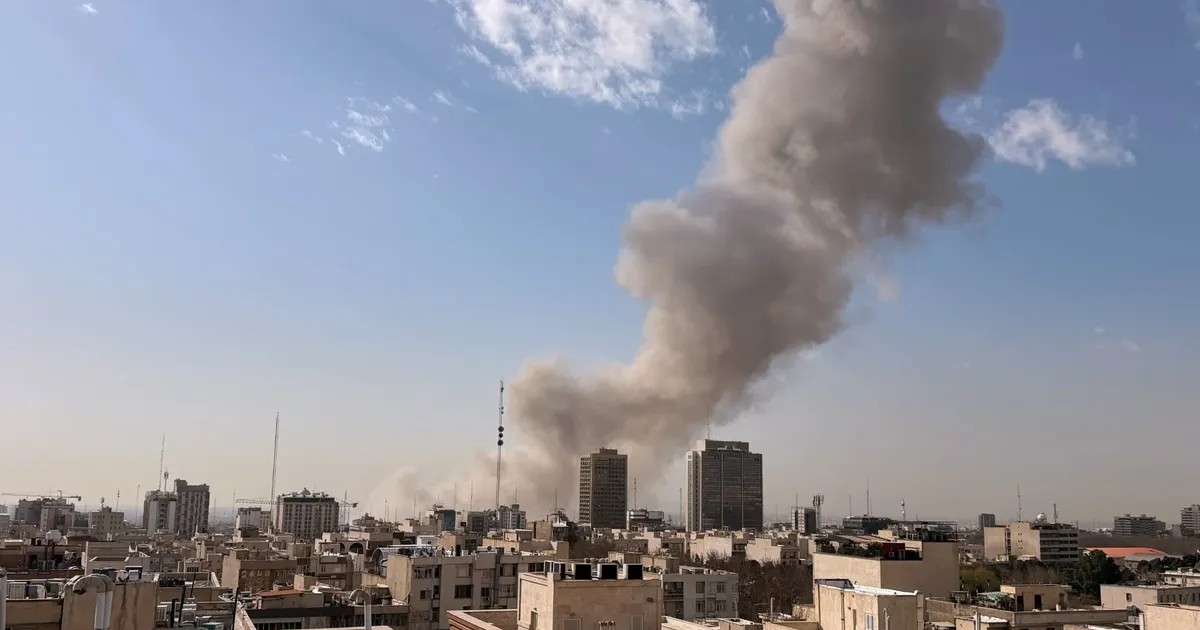
Iran's response, often referred to as "иран ракетная атака," was swift and uncompromising. In retaliation, Tehran launched missile salvos targeting Israel and US military bases located in the United Arab Emirates and Bahrain. The immediate aftermath revealed a mixed picture regarding the effectiveness of existing missile defense systems. While the overwhelming majority of incoming missiles were reportedly intercepted, videos circulated on social media platforms clearly depicted plumes of smoke at impact sites, indicating that not all projectiles were successfully neutralized. These visible breaches, even if limited, highlighted the inherent challenges of achieving a 100% interception rate against a determined and varied missile assault.
The success of a missile defense system is not merely measured by the number of projectiles intercepted, but also by its ability to prevent any significant damage or casualties, and crucially, its psychological impact. Even a small percentage of successful penetrations can undermine confidence in a defense shield. For Iran, securing a "prestige goal" – such as downing a US or Israeli aircraft – was seen as vital for boosting military morale and public resilience, especially after previous claims of such successes turned out to be unsubstantiated. The inability to score such a victory, despite the obvious missile defense breaches, could have significant implications for the morale of the Iranian armed forces and the resolve of its society.
Understanding Missile Defense Limitations:
Even the most advanced missile defense systems, like Israel's Iron Dome, David's Sling, and Arrow systems, or the US Patriot and THAAD batteries, face inherent limitations. These include:
- Swarm Attacks: A high volume of incoming projectiles can overwhelm even sophisticated systems.
- Varying Trajectories and Speeds: Different missile types (ballistic, cruise) and drone swarms pose diverse interception challenges.
- Decoys and Maneuverability: Advanced missiles can employ decoys or perform terminal maneuvers to evade interceptors.
- Cost-Effectiveness: Intercepting cheap drones or rockets with expensive interceptors is not sustainable in the long run.
The breaches observed during Iran's missile attack, however minor in their immediate physical impact, served as a stark reminder that no defense is impenetrable, and even limited success by an adversary can have profound psychological and strategic consequences.
Unpacking the Strategic Objectives and Future Trajectories
The overarching US strategic objectives in the conflict remain the elimination of the Islamic Republic's regime and the neutralization of its nuclear potential. However, a significant question hangs over the strategy: Can these ambitious goals be achieved without a full-scale ground operation? While then-President Trump had assured a "short operation," many experts expressed skepticism about the feasibility of achieving such comprehensive objectives purely through air power. The decision to halt an aerial campaign and recall forces is always possible, but the strategic depth required for regime change often necessitates a presence on the ground.
Looking ahead, analysts anticipated potential next moves. A particularly vulnerable point in Iran's defenses is its naval fleet, and an attack on this segment could be seen as highly effective, both strategically and for its potential media impact. The US had reportedly prepared an operational group known as "Scorpion Strike," equipped with LUCAS kamikaze drones – a system conceptually similar to Russia's "Geran-2." The deployment of such advanced drone technology signals a shift in modern warfare tactics, emphasizing precision, stealth, and potentially, swarm attacks that could further challenge Iran's remaining defenses. For insights into the broader strategic planning, refer to
Iran Conflict: US Strategy for Regime Change Without Ground Troops.
Regional Tensions and Global Implications
The immediate military actions, including the "иран ракетная атака," are but one facet of a much larger, intricate geopolitical tapestry. The escalation profoundly impacts regional stability, directly affecting Gulf states, global oil markets, and vital shipping lanes. Proxy conflicts across the Middle East could intensify, drawing in more actors and further destabilizing an already volatile region. The international community watches with bated breath, as the risk of a wider conflagration remains palpable. Iran's strategic geographic location, its alliances, and its significant role in various regional power dynamics mean that any major conflict involving Tehran carries substantial global ramifications. The delicate balance of power, constantly tested, is now under unprecedented strain, demanding careful diplomatic maneuvering alongside military considerations.
Conclusion
The recent exchange of strikes between US-Israeli forces and Iran marks a dangerous new chapter in regional tensions. The initial concentrated attacks on Iranian leadership and strategic assets were met with a defiant "иран ракетная атака" that, despite high interception rates, revealed concerning missile defense breaches. This complex interplay of aggression and retaliation underscores the precarious state of the Middle East, where strategic objectives, technological advancements, and the psychology of warfare intertwine. As the world watches, the critical questions revolve around whether the stated goals can be achieved without further escalation, and what lessons both sides have learned from this ongoing, high-stakes "experiment." The profound implications for regional and global stability demand vigilant analysis and a concerted effort to de-escalate what could easily spiral into a far more devastating conflict.